ACCS2026 Overview


ACCS is organised by IAFOR in association with the IAFOR Research Centre at the Osaka School of International Public Policy (OSIPP) in Osaka University, Japan.


Join us in Tokyo for ACCS2026!

May 09-13, 2026 | Held in Tokyo, Japan and Online

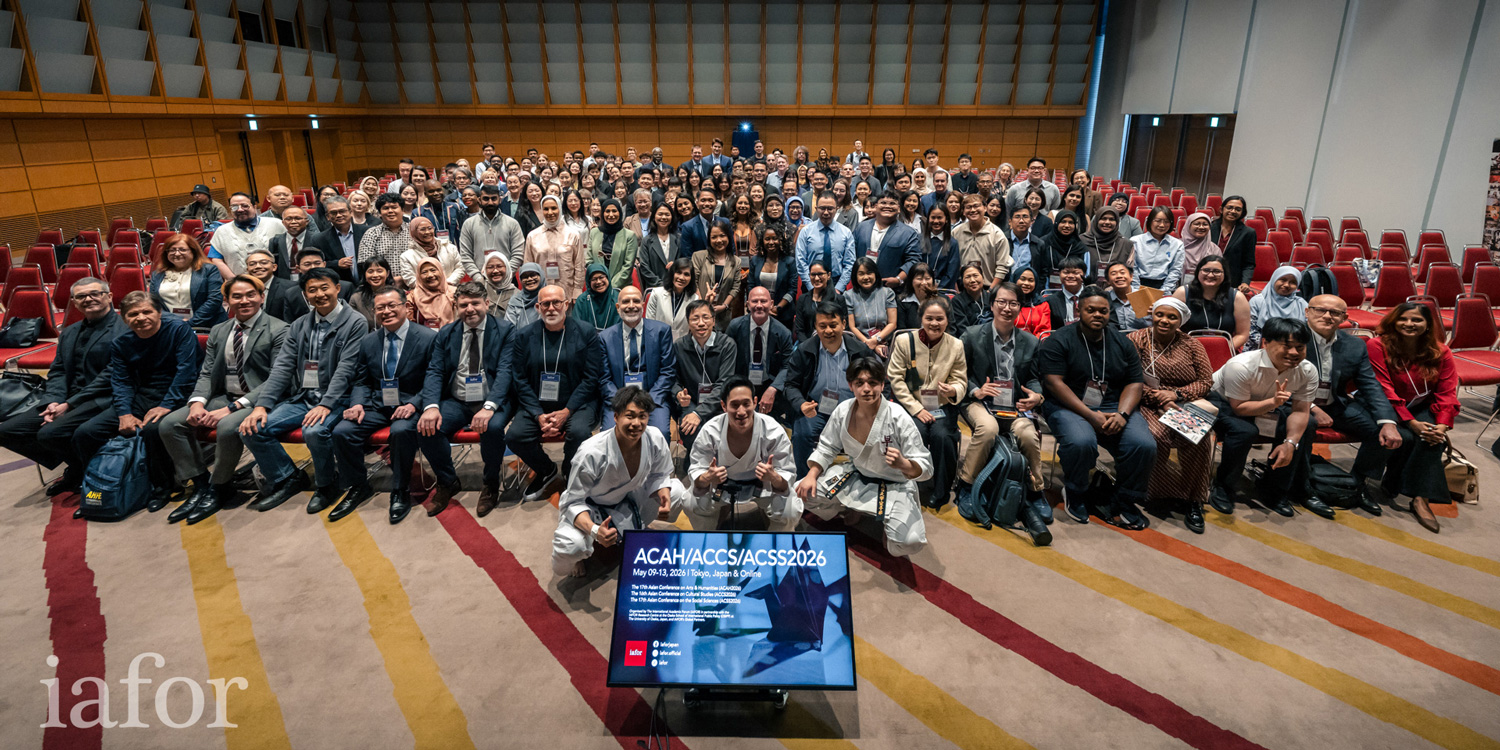
Held in partnership with the IAFOR Research Centre at the Osaka School of International Public Policy (OSIPP) at Osaka University, this international conference encourages academics and scholars to meet and exchange ideas and views in a forum stimulating respectful dialogue. This event will afford an exceptional opportunity for renewing old acquaintances, making new contacts, networking, and facilitating partnerships across national and disciplinary borders.

Since its founding in 2009, IAFOR has brought people and ideas together in a variety of events and platforms to promote and celebrate interdisciplinary study, and underline its importance. Over the past year we have engaged in many cross-sectoral projects, including those with universities (the University of Barcelona, Hofstra University, UCL, University of Belgrade and Moscow State University), a think tank (the East-West Center), as well as collaborative projects with the United Nations in New York, and here, with the Government of Japan through the Prime Minister’s office.

With the IAFOR Research Centre, we have engaged in a number of interdisciplinary initiatives we believe will have an important impact on domestic and international public policy conversations. It is through conferences like these that we expand our network and partners, and we have no doubt that ACCS2026 will offer a remarkable opportunity for the sharing of research and best practice, and for the meeting of people and ideas.

The 16th Asian Conference on Cultural Studies (ACCS2026) will be held alongside The 17th Asian Conference on the Social Sciences and The 17th Asian Conference on Arts & Humanities. Registration for either conference will allow delegates to attend sessions in the other.

ACCS is organised by IAFOR in association with the IAFOR Research Centre at the Osaka School of International Public Policy (OSIPP) in Osaka University, Japan.

We look forward to seeing you in Tokyo and online!

– The ACCS2026 Programme Committee

Key Information
  • Location & Venue: Held at the Toshi Center Hotel in Tokyo, Japan, and Online
  • Dates: Saturday, May 09, 2026 ​to Wednesday, May 13, 2026
  • Early Bird Abstract Submission Deadline: November 27, 2025*
  • Final Abstract Submission Deadline: February 12, 2026
  • Registration Deadline for Presenters: March 25, 2026

*Submit early to take advantage of the discounted registration rates. Learn more about our registration options.

Back to Top


Programme

To be Announced

  • Design Unbound: Expanding the Frontiers of Design
    Design Unbound: Expanding the Frontiers of Design
    Keynote Presentation: Miles Pennington
  • Community-Led Frailty Prevention in Japan: Empowering Older Adults for Healthy and Active Ageing with Well-being
    Community-Led Frailty Prevention in Japan: Empowering Older Adults for Healthy and Active Ageing with Well-being
    Keynote Presentation: Katsuya Iijima
  • Extractive Capitalism, Ethics, and Narratives of Belonging
    Extractive Capitalism, Ethics, and Narratives of Belonging
    Panel Presentation: TBA
  • Senior Academic Leadership
    Senior Academic Leadership
    Featured Roundtable: Umberto Ansaldo, Yuko Takahashi, Joseph Haldane

Back to Top


Speakers

To be Announced

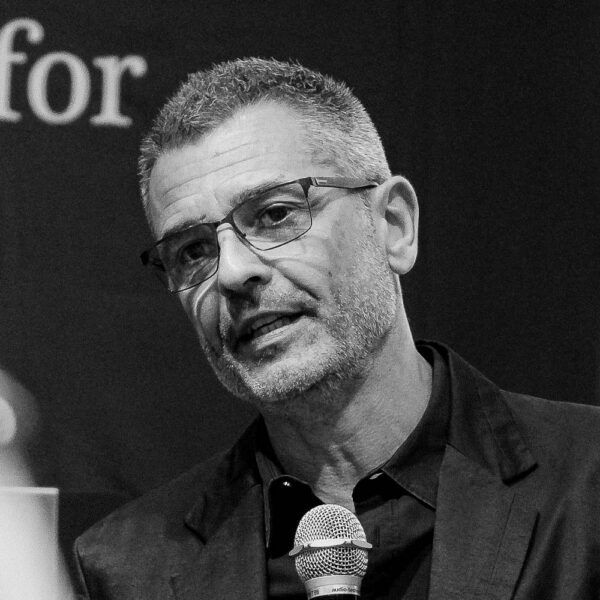
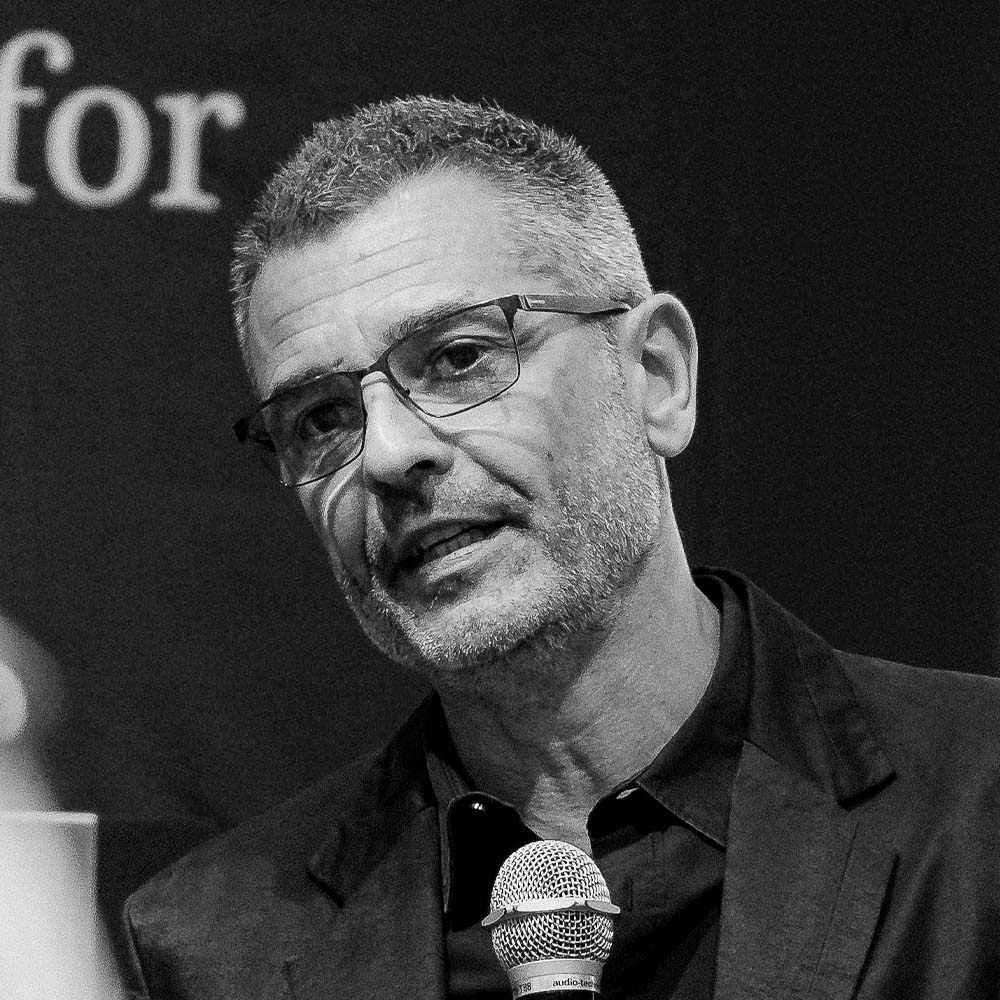
  • Umberto Ansaldo
    Umberto Ansaldo
    VinUniversity, Vietnam
  • Katsuya Iijima
    Katsuya Iijima
    The University of Tokyo, Japan
  • Diana Khor
    Diana Khor
    Hosei University, Japan
  • Emiko Miyashita
    Emiko Miyashita
    Haiku International Association, Japan
  • Miles Pennington
    Miles Pennington
    The University of Tokyo, Japan
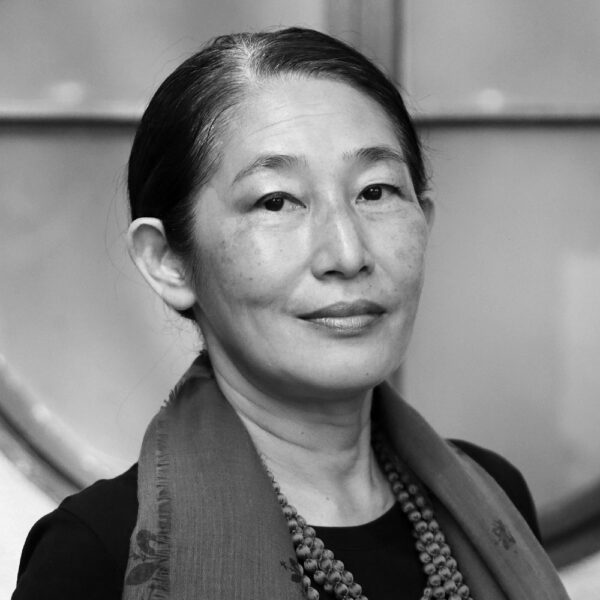
  • Yuko Takahashi
    Yuko Takahashi
    Tsuda University, Japan
  • Kyoko Uchimura
    Kyoko Uchimura
    Haiku International Association, Japan

Back to Top


Conference Committees

The International Academic Board (IAB)

Professor Anne Boddington, IAFOR, Japan (IAB Chair)
Dr Joseph Haldane, IAFOR & The University of Osaka, Japan, & University College London, United Kingdom
Professor Jun Arima, IAFOR & The University of Tokyo, Japan
Professor Virgil Hawkins, IAFOR Research Centre & The University of Osaka, Japan
Mr Lowell Sheppard, IAFOR & Never Too Late Academy, Japan

Professor Umberto Ansaldo, VinUniversity, Vietnam
Dr Susana Barreto, University of Porto, Portugal
Professor Grant Black, Chuo University, Japan
Dr Evangelia Chrysikou, Bartlett School of Sustainable Construction, University College London, United Kingdom
Professor Donald E. Hall, Binghamton University, United States
Professor Brendan Howe, Ewha Womans University, South Korea & The Asian Political and International Studies Association (APISA)
Dr James W. McNally, University of Michigan, United States & NACDA Program on Aging

Back to Top


Conference Programme Committee

Professor Umberto Ansaldo, VinUniversity, Vietnam
Professor Yasue Arimitsu, Doshisha University, Japan
Dr Sue Ballyn, University of Barcelona, Spain
Keiko Bang, Bang Singapore Pte Ltd., Singapore
Dr Thomas G. Endres, University of Northern Colorado, United States
Dr Darlene Machell Espena, Singapore Management University, Singapore
Professor Lorna Piatti-Farnell, Auckland University of Technology, New Zealand
Professor Gerard Goggin, Nanyang Technological University, Singapore
Dr Joseph Haldane, The International Academic Forum (IAFOR), Japan
Professor Donald E. Hall, Binghamton University, United States
Professor Baden Offord, Centre for Human Rights Education, Curtin University, Australia & Cultural Studies Association of Australasia
Professor Seiko Yasumoto, University of Sydney, Australia

Back to Top


Conference Review Committee

Professor Ferruh Mutlu Binark, Hacettepe University, Turkey
Dr Lydia Budod, Mountain Province State University, Philippines
Professor Teresa Chen, California State University-Long Beach, United States
Dr Chin-hui Chen, National Pingtung University of Science and Technology, Taiwan
Dr Gregory Paul Glasgow, Kanda University of International Studies, Japan
Dr Cecilia Ikeguchi, Gakushuin University ISS, Japan
Dr Leizel Parreno, West Visayas State University, Philippines
Dr Onumpai Samkhuntod, Kasetsart University, Thailand
Professor Geng Song, University of Hong Kong, Hong Kong

Back to Top

Design Unbound: Expanding the Frontiers of Design
Keynote Presentation: Miles Pennington

What is design today? Once primarily concerned with shaping products, design has steadily expanded its scope from objects to services, from services to systems, and increasingly into the realms of policy, society, and complex global challenges. As the world itself has become more interconnected and uncertain, design has evolved from a form-giving discipline into a way of thinking and acting: a means of navigating complexity, creating value, and turning intent into impact.

This keynote begins by exploring this evolution of design by tracing how its scope and role have expanded over time, using this as a foundation to reflect on a personal journey in design education and practice. From early experiences in industrial and product design, through interdisciplinary programmes such as Innovation Design Engineering, to leading initiatives that bring design into dialogue with science, technology, and society, a recurring question emerges: if design itself has moved beyond traditional boundaries, what should design education become?

The talk then introduces the development of the new UTokyo College of Design, initiated by President Fujii’s recognition that universities must rethink their role in a rapidly changing world. Rather than positioning design as a discipline among others, the College is conceived as a bridge between fields, between ideas and action, and between the university and society, enabling students to engage meaningfully with complex, real-world challenges.

Within this context, the concept of paradisciplinarity is briefly introduced as a way of understanding how disciplines can be both respected and transcended not as fixed structures, but as resources to be drawn upon in addressing complex problems. Rather than presenting a fixed model, this keynote reflects on an ongoing process: expanding the boundaries of design, and exploring how education itself might be redesigned to support new forms of thinking, learning, and societal transformation.

Read presenters' biographies
Community-Led Frailty Prevention in Japan: Empowering Older Adults for Healthy and Active Ageing with Well-being
Keynote Presentation: Katsuya Iijima

Japan has entered the era of a super-aged society, known as an era of 100-year life, both on an unprecedented scale and at extraordinary speed. In addition, there is a large gap between average life expectancy and healthy life expectancy, with a difference of only 10 years. We must promote healthy ageing, but in order to achieve healthy ageing with well-being and a suitable way of life for each individual living in each community, what is needed now?

When thinking about societal innovations to promote healthy ageing, we have to increase opportunities for connections and exchanges with people across all generations, not just conventional healthcare measures. In Japan, frailty prevention activities have been modeled based on peer support led by senior residents, and are currently actively promoting these activities nationwide. This resident-led peer support activity aims to create a new system of self-help and mutual assistance and also provides senior residents with their well-being or ikigai, their purpose in life, and a sense of fulfillment or accomplishment through contributing to the community. In addition, it is an urgent task to create a place for activities such as lifelong education and multi-generational exchange, and finally build a comprehensively integrated community care system that allows people to live with peace of mind when they eventually need long-term care. In order to rebuild a fulfilling local community, we not only have to promote interprofessional working, but also interdisciplinary gerontological collaboration with multi-stakeholders, such as municipal governments, industries, professional medical and care staff, academic researchers, and citizens. To progress innovation to promote both frailty prevention and community-based integrated care systems for older people, we are now conducting multi-faceted challenges as a community redesign toward a healthy ageing society.

Read presenters' biographies
Extractive Capitalism, Ethics, and Narratives of Belonging
Panel Presentation: TBA

Deep-sea mining and the global race for critical minerals are not only material and strategic developments, but also narrative ones shaped by extractive capitalism and the stories that justify it. Discourses of security and ‘protection’ often obscure the violence embedded in regimes of extraction, while the absence of a muscular global moral compass leaves societies navigating the rough seas of ethno-nationalism, war, domination, and supremacy. These dynamics are further sustained by an incorrect valuing of nature and the environment, grounded in a largely Western-led split between humanity and nature that renders the ocean a resource frontier rather than a shared ecological space.

The power of storytelling is therefore becoming a key cultural concern in the face of the existential crises posed by climate change, nuclear war, and AI, and in responding to the narrowing of future possibilities produced by ethno-nationalist and hyper-capitalist forces. We need, now more than ever, new narratives of belonging, knowledge-making, creativity, and ethics that can open up conversations and cultivate the skills, values, and strengths of conviviality and diverse voices. This panel offers a deep dive discussion into extractive capitalism, the violence of ‘protection’, and the ethical imaginaries that might help pave the way for more open, plural, and ecologically attuned futures.

Read presenters' biographies
Senior Academic Leadership
Featured Roundtable: Umberto Ansaldo, Yuko Takahashi, Joseph Haldane

This roundtable and interactive session will explore the career paths of academic leaders and provide tips on the skills needed to succeed in leadership positions. Speaking from national and professional contexts, the session leaders will describe their individual paths to leadership roles and the trade-offs that often accompany a career in higher education leadership and administration. Following the brief presentations, audience members will be asked to provide their own thoughts and observations on successful and unsuccessful leadership styles, as well as engage in an active discussion of the potential for academic leaders to make positive changes within their institutions and professional organisations.

Read presenters' biographies
Umberto Ansaldo
VinUniversity, Vietnam

Biography

Professor Umberto Ansaldo is currently Dean of the College of Arts and Sciences at VinUniversity, Vietnam. He previously served as Head of the School of Media, Creative Arts and Social Inquiry at Curtin University, Australia from 2021 through 2023, Head of the School of Literature, Art and Media at the University of Sydney, Australia from 2018 through 2020, and Head of the School of Humanities at HKU, where he taught from 2009 to 2018.

Professor Ansaldo’s disciplinary roots are in linguistics, specifically in the study of language contact, linguistic typology, and language documentation. He is the author of four books to date (with CUP, OUP, Routledge, and Stockholm University Press), has edited or co-edited 11 volumes and journal special collections, and has authored multiple journal articles and book chapters. His most recent publication is the co-editorship of The Routledge Handbook of Pidgin and Creole Languages (Routledge, 2021).

At HKU, Professor Ansaldo led the Humanities Area of Inquiry on the Common Core Curriculum Committee in HKU’s major revision of its curriculum (2010-2013), a time when, along with the University of Melbourne, Australia, HKU was leading in reimagining undergraduate curricula. As Chair of Linguistics, he was instrumental in establishing the Department within the top ten programmes in Linguistics (QS rankings), with the programme ranking at number one in Hong Kong.

At the University of Sydney, Professor Ansaldo sat on the University Executive Research Committee and led his School through a transformative period in terms of curriculum innovation and research engagement. He was in charge of overseeing the incorporation of the Sydney College of the Arts into the Faculty of Arts & Social Sciences.

Professor Ansaldo has secured competitive research grants and leveraged industry funding for the advancement of the humanities and social sciences throughout his career. One of his proudest achievements was his role in securing financial support to develop and host an exhibition on language and the brain, the ‘Talking Brains’ exhibition at the CosmoCaixa in Barcelona, Spain in 2017. This type of engagement and championing of the Humanities is what Umberto is most passionate about.

Professor Ansaldo has lived and worked in Sweden, The Netherlands, Singapore, Australia, and Hong Kong. and speaks seven languages, including Mandarin. He is well-acquainted with Asia and has conducted fieldwork in Muslim communities of the Indian Ocean, and has developed strong international networks in Southeast Asia, Japan, and Europe.


Previous Presentations

Panel Presentation (2025) | Peace Education in Times of Conflict
Keynote Presentation (2024) | Can Today’s Universities Contribute to a Better Future?
Panel Presentation (2022) | Indigenous Ways of Knowing, Precarity and Resilience
Katsuya Iijima
The University of Tokyo, Japan

Biography

Professor Katsuya Iijima is a medical doctor in Geriatric Medicine and Professor within the Institute for Future Initiatives at The University of Tokyo, Japan. As a Gerontology researcher, he is currently the Principal Investigator of many projects in regard to prevention of sarcopenia-related frailty. He participated in the Third Meeting of the Asia-Pacific Parliamentarian Forum on Global Health, chaired by the Japan Parliamentarian League for the World Health Organization (WHO) in Tokyo, in August 2017. He contributed to developing the ‘Tokyo Declaration’ via his presentation regarding Japan’s experiences in addressing a ‘super-ageing society’ through multisectoral strategies. His current specialties and interests include prevention of sarcopenia-related frailty with well-being and the Japanese concept of ‘Ikigai’, population approach and cultivation of older resident supporters in local communities, integrated community-based care systems,, integrated implementation of health services and care prevention for older adults in new policies of the Ministry of Health, Labour and Welfare, andGeron-Technology, or medical-engineering collaboration. He is an intellectual private-sector board member of the National Assembly of Dynamic Engagement of All Citizens and a professional board member of the Ministry of Health, Labour and Welfare.

Keynote Presentation (2026) | Community-Led Frailty Prevention in Japan: Empowering Older Adults for Healthy and Active Ageing with Well-being
Diana Khor
Hosei University, Japan

Biography

Professor Diana Khor is the President of Hosei University in Tokyo, Japan, a position she has held since March 2025. She previously served in several senior leadership roles at the university, including Executive Trustee and Vice President, Director of the Global Education Center, and Dean of the Faculty of Global and Interdisciplinary Studies. She received her Bachelor of Social Science in 1983 and her Master of Philosophy degrees in 1985 from the University of Hong Kong. She also earned her MA in Sociology in 1987, and her PhD in Sociology in 1994 from Stanford University, United States.

Professor Khor joined Hosei University in 1999 as an Assistant Professor in the Faculty of General Education. In 2003, she was appointed Associate Professor in the Faculty of Law and was promoted to Professor in 2005. Since 2008, she has served as Professor in the Faculty of Global and Interdisciplinary Studies.

Professor Khor’s academic background is in Sociology, with a focus on gender and sexuality, particularly in East Asia. As Vice President and now President, she has been committed to advancing global education, strengthening international engagement in higher education, and promoting diversity, equity and inclusion across the university.

Roundtable Discussion (2026) | Senior Academic Leadership
Emiko Miyashita
Haiku International Association, Japan

Biography

Emiko Miyashita is a prominent and widely published haiku poet, as well as an award-winning translator who has given invited lectures and workshops around the world. She serves as a councillor for the Haiku International Association, as well as secretary of the Haiku Poets Association International Department in Tokyo. She is a dojin (leading member) of Ten’i (Providence) haiku group lead by Dr Akito Arima, and also a dojin of the Shin (Morning Sun), haiku group lead by Dr Akira Omine. From January 2008, until March 2010, she judged and wrote an English-language haiku column with Michael Dylan Welch every first Sunday in the Asahi weekly paper.

Haiku Workshop (2026) | What Is Haiku?

Previous Presentations

Haiku Workshop (2025) | What Is Haiku?
Haiku Workshop (2024) | What Is Haiku?
Miles Pennington
The University of Tokyo, Japan

Biography

Miles Pennington is Professor of Design-Led Innovation at the University of Tokyo, Japan. He is the prospective Dean of the UTokyo College of Design, a new interdisciplinary programme focused on addressing complex societal challenges through design due to open in September 2027. He is also Director of the DLX Design Lab, an international and multidisciplinary lab that collaborates with researchers across the university to create value through design. Professor Pennington’s projects have included work on low-cost ocean monitoring, bio-intelligent systems, innovative healthcare devices, and explorations into metamaterials and coral conservation. Prior to joining The University of Tokyo in 2017, he led the Innovation Design Engineering (IDE) at the Royal College of Art, United Kingdom, a joint Master’s programme with Imperial College London, United Kingdom. He is an alumnus of IDE, graduating in 1992, and was also the founder and Head of the university’s Global Innovation Design (GID) programme. In addition to his core roles, he was a Director of Takram, London, an innovation consultancy with its headquarters in Tokyo, until 2017. He is currently Co-Director of the DLX Design Academy and has served as Specially Appointed Advisor to the President on Design Vision since April 2023.

Keynote Presentation (2025) | Design Unbound: Expanding the Frontiers of Design
Yuko Takahashi
Tsuda University, Japan

Biography

Professor Yuko Takahashi was named the eleventh president of Tsuda College (now Tsuda University) in 2016. She holds a BA from Tsuda College, an MA in International Affairs from the University of Tsukuba, Japan; and an MA in History and a PhD in Education from The University of Kansas. Her major research areas are American studies, American social history, and gender history.

Professor Takahashi has held numerous academic leadership roles, including president of the Japan University Accreditation Association (2023–present), president of the International Federation for Research in Women's History (2020–2025), and president of the Japanese Association for American Studies (2018–2020). She also served as a commission member of the Japan-U.S. Educational Commission (2018–2022), is a council member of the Science Council of Japan, and a trustee of the American Studies Foundation. A two-time Fulbright scholar, she conducted research at Stanford University in 2003 and Wellesley College in 2013. Her publications include Tsuda Umeko no Shakaishi (Umeko Tsuda: A Social History, 2002) and Tsuda umeko ̄ joshi kyōiku o hiraku (Umeko Tsuda: Pioneering Women’s Education, 2022). 

Featured Roundtable (2026) | TBA
Kyoko Uchimura
Haiku International Association, Japan
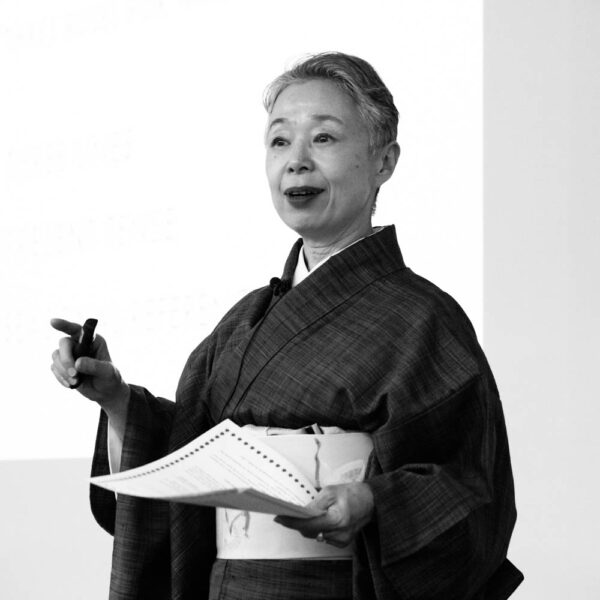
Biography

Ms Kyoko Uchimura is a haiku poet born in Tokyo. She earned a BA in Art History from International Christian University, Japan, and studied at the University of Sussex, United Kingdom, from 1988 to 1989 as an exchange student. She worked for Christie’s art auction house from 1990 to 2014, contributing her expertise there for over twenty years.

Ms Uchimura began writing haiku in 2002, receiving the New Talent Award of the haiku group ‘Ten’I’, led by Dr Akito Arima, in 2008. She recently won first prize in the group’s essay contest in 2023. In 2013, she published her first haiku collection, titled ‘Venus’. She is currently a member of the Association of Haiku Poets in Japan.

Since 2014, Ms Uchimura has worked in an editorial role for Ten’I and the Haiku International Association since 2018, where she serves as a councilor and is responsible for editing the association’s quarterly haiku magazine, ‘HI’. She often writes short reviews for other haiku magazines. She has supported the administrative office of the Haiku UNESCO Promotion Council since 2018.

Haiku Workshop (2026) | What is Haiku?

Previous Presentations

Haiku Workshop (2025) | What is Haiku?