

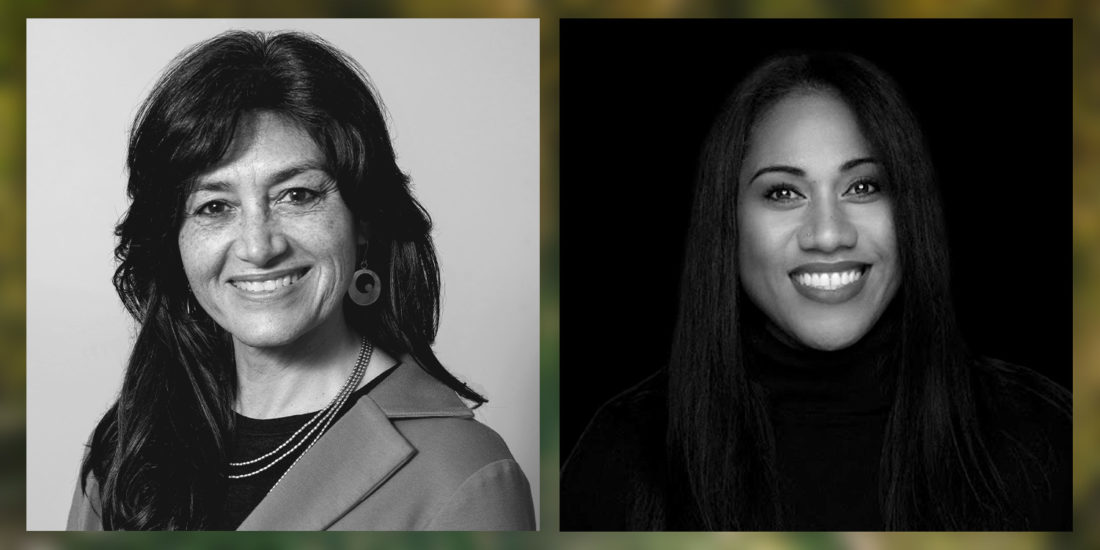
Pilar Kasat of Curtin University, Australia, and Sēini F Taumoepeau, artist, performer, activist & radio presenter, have joined The 12th Asian Conference on Cultural Studies (ACCS2022) and The 12th Asian Conference on Asian Studies (ACAS2022) on the panel for “Indigenous Ways of Knowing, Precarity and Resilience”.
Marcelle Townsend-Cross of the University of Sydney, Australia, and Yirga Gelaw Woldeyes of Curtin University, Australia, have also been chosen to discuss this topic. Follow the conference website and social media pages (Facebook / Twitter) for more information.
To participate in ACCS/ACAS2022 as an audience member, please register for the conference.
The panel presentation will also be available for IAFOR Members to view online. To find out more, please visit the IAFOR Membership page.
Speaker Biography
Pilar Kasat
Curtin University, Australia
 Dr Pilar Kasat is a Chilean-Australian living in the ancient country of the Whadjuk people of the Noongar Nation (Perth, Western Australia). Dr Kasat completed her PhD, “Singing the Women Back Up: Arts for Social Change and the Empowerment of Women” in 2020 and a postdoctoral fellowship with Curtin University in December 2021. She has more than twenty years of direct involvement in participatory arts. As a practitioner and in leadership roles, Dr Kasat developed a track record of creative intercultural dialogue with First Nations and people of colour within a social justice framework. Dr Kasat is the chairwoman of Art on the Move, the inaugural chair of Women of Colour Australia, and previously the deputy chair of Diversity Arts Australia. Her writing collaborations on the role of the arts to drive social change have been published in international academic journals and national industry magazines.
Sēini F Taumoepeau
Artist, Performer, Activist & Radio Presenter
 (She/Her) is Orator and Songwoman with an intersectional Oceania–Pacific lens and First Nations focus. She practises Faivā (performance of space). An Indigenous woman of the Mōana, direct descendant of ancient Polynesian celestial navigators and chiefly lineage. Analogue to digital interdisciplinary artist and coach/mentor from Sydney’s early hip hop generation, Sēini continues navigational principles with leadership: Founder of OceaniaX and LELEI Wellness. She works with the invisible and intangible, carrying medicine in presence, hands and voice, commanding her aesthetic in harmony and rhythm. Sēini is known by names: SistaNative, Napangardi (Skin-name) and Cantora (Capoeira Name). From Kingdom of Tonga origins and an Australian veteran with a career spanning more than 30 years as performance artist, presenter/broadcaster and creative industries professional. Sēini extends the narratives of Indigenous Oceania in the arts, media, culture, education and personal development sectors. Her storytelling praxis occupies the outskirts, fringe or margins – exploring connectivity, hōhoko (genealogy), ritual, ceremony, communication, relational intersectionality and displacement across Tā Vā (time–space) reality. Emerging Elder and lifelong scholar, Sēini brings Oceanic wisdom and indigenous science to the forefront, as an extension of the emergent Indigenous cultures of her people of the Mōana. Wayfinding the horizon.
Abstract
Indigenous Ways of Knowing, Precarity and Resilience
Contemporary narratives of environmental and human rights protection, racial and other connected forms of social justice, are increasingly informed and guided by indigenous struggles, indigenous intellectuals and allied scholars and activists. “Those struggles are far from over, but the premises with which many of us operate are far different than they were. These usually begin as changes in consciousness and new narratives” (Rebecca Solnit, 2022).
Global warming, COVID-19, widespread political unrest, entrenched economic inequality, the dispossession and displacement of peoples, the prospect of war and other crises are evidence that we live in precarious times. Indigenous peoples and their ways of knowing and belonging and deep resilience guide us all in the formation of new narratives towards a sustainable ecology of living in the world. To say that such perspectives challenge accepted ideas of co-existence and what is now taken for granted as the dominant western template applied across the world, would be an understatement. Indigenous knowledges foreground and bring an awareness of the relationship between land, kinship, and humanity (Irene Watson, 2005).
Indigenous ways of knowing not only provide us with answers that help us address the current crises but also ask us questions that we need to address now. These are questions of epistemic justice that relate to the politics of knowledge production, academic power-sharing, addressing misrepresentations and distortions of their history and place in the world. They challenge us to imagine what we should do to let indigenous people teach and guide us in the practice of knowing about indigenous ways of knowing.
From a range of indigenous and culturally diverse voices drawn from Africa, Australia, Oceania and South America, the speakers will discuss how they understand the importance of indigenous ways of knowing. They will explore how indigenous cultures are informed by their traditions and diverse lived experience, including going beyond the inadequacy of western colonial imperialism, to provide answers to the challenges around us.
